
Many homebuyers planning a move to NC look for wind and hail insurance, expecting a single homeowners policy to cover everything. Along North Carolina’s coast, that assumption can create challenges during the home-buying process because homeowners insurance, wind coverage, and flood coverage are often arranged separately.
For those relocating to Wilmington, Leland, Hampstead, Carolina Beach, Wrightsville Beach, Oak Island, or Topsail Island, understanding those differences before closing can prevent delays and make it easier to secure the coverage a lender requires.
What Changes When You Insure a Coastal NC Home
A homeowners policy purchased inland may look very different from one written for a coastal property.
In several coastal counties, insurers may exclude wind coverage from a standard homeowners policy while still covering risks such as fire, theft, and personal liability. Buyers who have never insured a coastal property are often surprised to learn that wind protection may need to come from a separate policy.
That information becomes important during the mortgage process. Lenders need confirmation that all required coverages are in place before closing. If a home requires separate wind coverage, flood insurance, or both, additional underwriting reviews may be involved.
Older homes, waterfront properties, vacation homes, and rentals can take longer to place than a typical inland residence. Starting the insurance process shortly after an offer is accepted gives buyers time to evaluate options before closing deadlines begin to tighten.
How Does Wind and Hail Insurance Work in NC?
The North Carolina Insurance Underwriting Association, commonly called NCIUA, operates the Coastal Property Insurance Pool, which many homeowners still know as the North Carolina Beach Plan. The program provides wind and hail coverage for eligible properties when that protection is unavailable through a standard carrier.
Buyers relocating from inland areas or other states often encounter wind and hail insurance in NC for the first time during the closing process.
A separate wind policy works alongside a homeowners policy rather than replacing it. Homeowners insurance continues to cover risks such as fire, liability, and other covered losses. Covered windstorm and hail damage fall under the wind policy when coverage is structured that way.
Some homes qualify for wind coverage through private carriers, while others are better suited for placement through the NCIUA. Eligibility depends on factors such as location, construction details, and underwriting guidelines.
That review process becomes especially important for older homes, rental properties, and other coastal risks that may not fit a standard insurance profile.
What is a Plan for Percentage-Based Wind Deductibles?
Many buyers focus on premium costs because premiums are easy to compare. Wind deductibles can have a greater effect on out-of-pocket expenses after a storm.
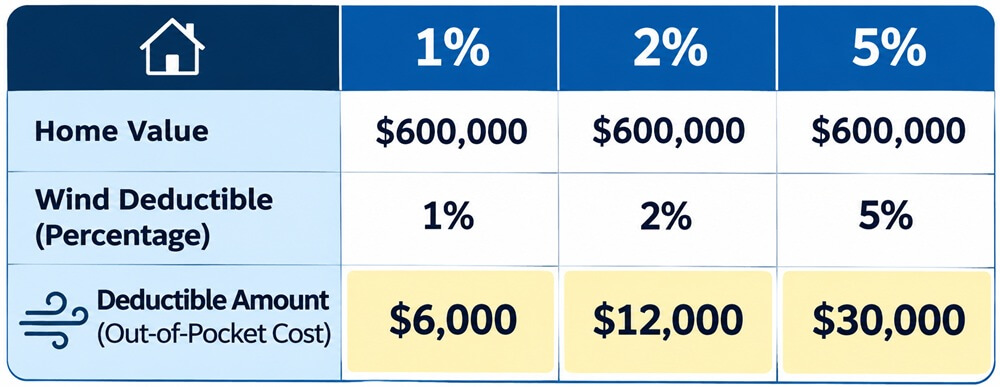
Coastal wind and named-storm deductibles are often expressed as a percentage of the dwelling coverage limit rather than a flat dollar amount.
A property insured for $600,000 with a 2%[JPP1] wind deductible would leave the homeowner responsible for the first $12,000 of a covered wind loss before insurance payments begin.
Two quotes with similar premiums can produce very different financial outcomes after a claim. Reviewing deductibles alongside coverage limits provides a more complete picture of how a policy will respond when a storm causes damage.
Some homes may qualify for windstorm mitigation credits. Features such as wind-resistant roofing systems, opening protection, and fortified construction standards can affect underwriting and eligibility for certain discounts.
Why You Shouldn’t Skip Flood Insurance on the Coast
Storm surge and rising water create losses that homeowners insurance and wind policies generally do not cover.
Flood insurance in NC addresses those exposures through a separate policy. Storm surge, tidal flooding, and rising water are among the loss events that typically require dedicated flood coverage.
Before purchasing a home, buyers can review flood-zone information through North Carolina’s Flood Risk Information System. Property-specific flood mapping can reveal exposure that may influence insurance requirements, lender requirements, or future ownership costs.
Policy effective dates deserve attention as well. Standard National Flood Insurance Program policies generally include a 30-day waiting period. Federal rules provide exceptions for certain policies purchased in connection with a mortgage closing, which is one reason flood discussions often begin before closing documents are finalized.
Two homes located within the same community can have very different flood insurance requirements because elevation, flood-zone designation, lender requirements, and property characteristics vary from address to address.
Which Policies to Line Up Before Closing
Most coastal home purchases involve several coverage layers rather than a single insurance policy.
| Policy | What It Covers | When to Set It Up |
| Homeowners | Fire, theft, personal liability, and other covered property losses | Once the purchase offer is accepted |
| Wind and hail | Wind damage if excluded from the homeowners policy | Alongside homeowners coverage |
| Flood | Rising water, storm surge, and other covered flood losses | During the closing process |
| Auto | North Carolina auto liability requirements and vehicle protection | Shortly after establishing residency |
Insurance decisions connected to a coastal move often involve more than obtaining a quote. Flood-zone research, lender requirements, deductible structures, underwriting restrictions, and closing timelines all shape the final coverage package.
North Carolina residents should also review their auto insurance after relocating. State law now requires minimum liability limits of 50/100/50, which may be higher than the minimum limits required in some other states.
The way a property will be used matters, too. Insurers evaluate owner-occupied homes, second homes, and rental properties differently. Many second homes and rental properties require a dwelling policy rather than a traditional homeowners policy, which can affect carrier eligibility and placement options.
Work With an Agent Who Knows the Coast
Coastal Shield Insurance helps homeowners throughout Wilmington, Leland, Hampstead, Wrightsville Beach, Carolina Beach, Oak Island, Topsail Island, and nearby communities understand how homeowners insurance, flood coverage, and wind and hail insurance in NC fit together. The agency shops vetted A-rated carriers, explains coverage in plain language, and works with buyers before closing so insurance requirements are addressed early in the process.
If you’re purchasing a home along the North Carolina coast, contact Coastal Shield Insurance before closing to review coverage options and coordinate the policies your property may require.