
• Skip to primary navigation
  • Skip to main content
  • Skip to primary sidebar

Coastal Shield Insurance

coastal shield insurance logoCoastal Shield Insurance logo

Coastal Insurance Agency in Wilmington, NC

  • Shop Insurance

    • Property

      • Condo
      • Flood
      • Homeowners
      • Hurricane
      • Rental Property
    • Vehicles

      • Boat
      • Car
      • RV
    • Personal

      • Jewelry
      • Umbrella
    • Commercial

      • Business Owner’s Policy
      • Business Interruption
      • General Liability
  • Areas Served
  • Resource Center
    • Tips & Guides

      • Coastal North Carolina Newcomer’s Guide
      • Do I Need Flood Insurance?
      • Hurricane Season Preparedness Checklist
      • Insuring a Second Home or Vacation Rental
    • Help & Support

      • Get Proof of Insurance
      • Frequently Asked Questions
      • Contact Us
  • About
    • Careers
    • Meet the Team
    • Referral Partners
    • Reviews
(910) 981-1948
Start My Quote

Home insurance

October 20, 2026 by Anna Brothers

Renting a beach house in Topsail Island, Oak Island, or another coastal North Carolina community can turn a second home into an income-producing property. Rental activity also changes how an insurer views the home, and the policy structure has to reflect how the property is actually being used.

A standard homeowners policy in North Carolina may no longer fit once paying guests regularly occupy the house. Sorting the coverage out before a loss is what gives you room to address property, liability, rental income, wind, and flood exposure while there is still time to change something.

woman enjoying her vacation home in north carolina

In This Article: Why a rental needs a dwelling or rental policy rather than a homeowners policy, the four coverages a coastal rental generally carries, what underwriters ask before they will quote a beach house in NC, and the gaps owners find out about after a guest claim or a storm.

Why a Rental Does Not Fit a Standard Homeowners Policy

North Carolina’s Department of Insurance describes homeowners insurance as coverage generally designed for owner-occupied homes. A property used primarily for weekly guest stays presents a different exposure, so an insurer may require a dwelling or rental policy written for that use.

The right structure depends on how frequently you rent, how long guests stay, and how often you occupy the property yourself. Short-term rental insurance in North Carolina can differ from coverage for a long-term tenant, a seasonal home, or a second home rented only a few weeks a year.

Always disclose rental use to your agent. Finding out after a loss that the home’s use did not match the policy leaves you dealing with coverage questions at the worst possible time.

The Coverage a Coastal Rental Actually Needs

Most coastal rentals end up carrying several policies rather than one, and the pieces have to be built to work together.

CoverageWhat it protectsWhy it matters on a rental
Dwelling and contentsThe building and owner-supplied furnishingsFurniture, appliances, and other rental contents need coverage suited to the property’s use
LiabilityClaims involving guest injuries or property damagePaying guests create liability exposures that differ from ordinary household use
Loss of rental incomeCovered rental income lost while the home is unusableA lengthy repair can take booked weeks out of a profitable season
Wind and hail plus floodCertain storm-related property lossesCoastal homes may need separate policies for these exposures

Wind and flood exclusions deserve the closest reading of anything on a coastal policy. North Carolina DOI explains that location and underwriting guidelines affect whether windstorm and hail coverage is included in a primary residential policy, which is why so many coastal owners end up carrying separate wind and hail insurance in NC.
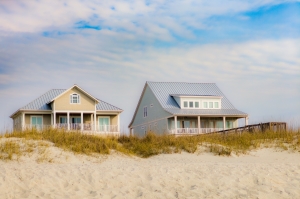
luxurious vacation homes on coastal north carolina

Flooding sits outside the homeowners policy entirely. FEMA estimates that just 1 inch of floodwater can cause roughly $25,000 in damage to a typical home, and that is the reason flood insurance for a coastal North Carolina property belongs in the conversation even when the house is nowhere near the ocean.

What Underwriters Ask Before They Will Quote

Having the documents together early is what makes quoting a beach house in NC go smoothly. An agent will ask for the year built, roof age and material, distance to water, prior claims, updates to major systems, and, where it applies, an elevation certificate.

Rental arrangements change the picture too. Expect questions about rental frequency, typical length of stay, guest screening, maximum occupancy, and whether a professional property manager handles bookings.

Older beach homes and heavily rented properties take more work to place. Coastal Shield Insurance shops a roster of A-rated carriers for exactly those properties, and comparing several of them is usually what turns a hard-to-place rental into a bound policy.

Gaps Owners Discover Too Late

Protection offered through a booking platform can seem more comprehensive than it really is.

Airbnb states that their host damage protection isn’t an insurance policy, and AirCover doesn’t replace homeowners insurance or adequate liability coverage. Vrbo’s host terms similarly state that hosts are responsible for maintaining insurance suitable for their rental activity.

Guest-caused damage, theft, and liability belong in a conversation with your agent rather than assumed into a platform guarantee.
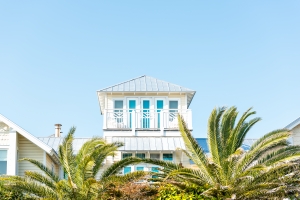
large luxurious vacation home in north carolina

Seasonal vacancy deserves the same attention. Some dwelling policies place conditions on certain losses after a property has been vacant for a specified period, so if your rental sits empty through part of the winter, tell your agent how the home is occupied across the whole year.

How to Place Coverage on a Coastal Rental

Start with accurate property and rental information. Gather the current policy, roof details, claims history, elevation documents, rental schedule, property-management information, and any lender requirements before requesting quotes.

The right arrangement may resemble landlord insurance in North Carolina, a dwelling policy, or a specialty vacation-rental program, depending on how you use the house. Coastal properties often need separate wind and flood coverage alongside it, which is why the policies are worth reviewing as one picture rather than one at a time.

Coastal Shield Insurance works with coastal homeowners across the Carolina coast and shops A-rated carriers for properties that are harder to place, older homes and rentals among them. Tell us how the property is rented, what coverage you already carry, and where you think the gaps are, and we will review the whole arrangement with you before the next guest checks in.

Filed Under: Home insurance

August 14, 2026 by Anna Brothers

You bought the second home for family weeks in July, then listed it the rest of the season to help carry the mortgage. That listing is the moment your insurance policy stopped matching your house. Renting the property is business use, and business use is excluded from homeowners and secondary dwelling forms. That single exclusion is what separates a second home from a vacation rental, and it is where uninsured losses on this coast usually begin.

Renting it out changes what your policy covers

Homeowners and secondary dwelling forms are written for personal use. Rental activity falls outside them, and the exclusion does not distinguish between renting for a whole season and renting for one weekend in July.

Carrier appetite varies. Some permit limited rental by endorsement. Others decline the risk entirely once a property goes on a booking platform, and some draw the line at a specific number of days or a minimum rental term. There is no uniform rule, so the answer has to come from your own carrier. A host forum cannot answer it for your policy.

Disclosure is not optional. An undisclosed rental found during a claim investigation gives the carrier grounds to deny the loss and, depending on the facts, to rescind the policy back to inception. Platform host guarantees do not fill that hole either. They are limited in scope, often sit excess over your own coverage, and are not a substitute for a policy written for the occupancy.

What the property needs is rental and vacation property insurance matched to how it is actually used, whether that is a dwelling policy for long-term tenants or a short-term rental form for nightly bookings.

What a rental dwelling policy adds

Loss of rental income is the coverage owners miss most often. It replaces the income the property would have earned while it sits unrentable after a covered loss, which on this coast can mean an entire summer of canceled bookings following one storm.

Furnishings are the second gap. Personal property coverage on a dwelling policy is low or absent unless you ask for it, and beds, televisions, kitchen equipment, and outdoor furniture add up faster than owners expect.

If the property is a condo, the building sits under the association’s master policy and your responsibility begins somewhere inside the walls. Condo insurance covers that interior along with loss assessment, which is the share of a covered association loss that gets passed back to unit owners, usually after a named storm has run through the master policy deductible.

Guest injuries are the exposure owners underestimate

Liability on a rental is not the liability you carry at home. Paying guests use pools, hot tubs, stairs, docks, and boardwalks without knowing the property, and the duty of care stays with the owner.

North Carolina has already produced case law here. In Poage v. Cox, the state Court of Appeals reversed summary judgment and allowed a negligence claim to proceed against the owner of a short-term rental and the company she had hired to maintain the hot tub, after two guests contracted Legionnaires’ disease. One of the unresolved questions the court identified was whether the owner had effectively handed that duty off to the maintenance company. The court decided nothing about liability, which is the part owners should notice. Defense costs begin when a claim is filed, not when a court decides who was at fault.

Rentals under 90 days for vacation or leisure fall under the North Carolina Vacation Rental Act, which requires a written vacation rental agreement carrying a specific statutory notice. That agreement is also where property rules and equipment instructions get documented, which matters if a claim ever turns on what the guest was told. An umbrella policy sits above the liability limit on the rental policy, and it is worth pricing once paying guests are using the house.

The off-season creates its own coverage problem

An empty house is a different risk. Many policies restrict or exclude certain losses once a dwelling has been vacant beyond a stated period, commonly 30 or 60 days, and water damage from a pipe that froze in an unheated house is a routine denial.

Wind and flood stay separate on a rental exactly as they do on a primary residence, and a named storm deductible calculated as a percentage of the dwelling limit applies the same way. Work the hurricane season checklist for the rental as well as your own house, because the property you visit twice a year is the one nobody documented.

Vacation rental insurance questions owners ask

Does homeowners insurance cover a vacation rental?

Generally no. Renting the property is business use, which most homeowners and secondary dwelling policies exclude. Some carriers permit limited rental by endorsement, so the answer has to come from your own carrier.

What does vacation rental insurance cover that a homeowners policy does not?

Rental income lost after a covered loss, liability arising from paying guests, and the furnishings you supply for their use. Coverage varies by form, so limits should be reviewed individually.

Do I have to tell my insurance company I am renting my house?

Yes. An undisclosed rental can give the carrier grounds to deny a claim and, depending on the facts, to rescind the policy back to its start date.

Getting the occupancy written correctly

Quoting a rental correctly takes the address, how many weeks a year it rents, how bookings are handled, and whether guests have access to a pool, hot tub, or dock.

Send us those details and we will tell you whether your current policy responds and what properly written vacation rental insurance costs. Give us a call before the next booking rather than after the next claim.

Filed Under: Home insurance

Primary Sidebar

Coastal Shield Insurance logo light

Independent insurance for coastal North Carolina home, auto, and flood, explained in plain English.

2001 Castle Hayne Rd
Wilmington, NC 28401

(910) 981-1948

Link to company Facebook page

Link to company LinkedIn page

  • Coverage

    • Condo
    • Flood
    • Homeowners
    • Hurricane
    • Rental Property
    • All Coverage Types
  • Company

    • About Us
    • Careers
    • Meet the Team
    • Reviews
    • Referral Partners
  • Resources

    • Resource Center
    • FAQs
    • Get Proof of Insurance
    • Areas Served
    • Contact Us

© 2026 Atlantic Shield Insurance LLC. All rights reserved.·Privacy Policy·Terms of Use·Powered by 321 Web Marketing